A while back, I saw a product in my Pinterest feed which, I’ll admit, got my attention.
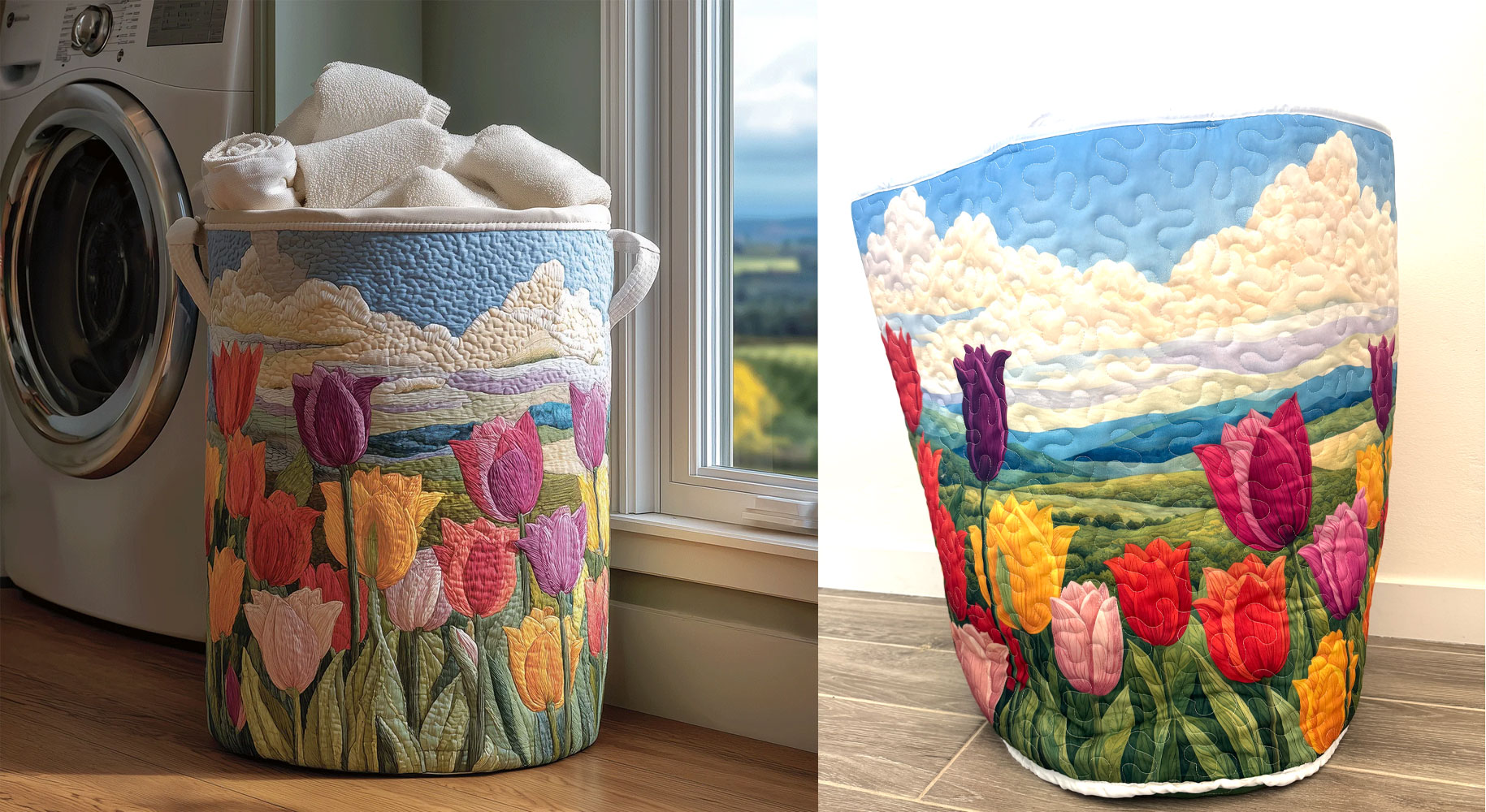
It was a quilted laundry hamper with tulips amid green grass and blue sky. What made it so beautiful and unique is that each part of the scene – the tulips, the clouds, the grass – were quilted right into the cloth hamper with various fabrics, creating a special artistic effect.
I decided to order it for myself.
But when my package arrived a few weeks later, I was confused.
What is this? I thought to myself as I opened the package. It’s certainly not what I ordered.
Pulling it out from the box, I saw that this hamper was made with a fabric that featured tulips in a field. A far, far cry from the detailed, quilted piece I saw online.
Thinking perhaps I’d remembered wrongly (or was simply going crazy!) I went to my laptop and returned to the page where I’d ordered the product.
And that’s when I realized what happened – this beautiful image of a quilted hamper which had so captured my attention – was made by AI.
And I’d been had.
I immediately went to the website’s Return Policy page, but guess what? No returns.
(Which, of course, makes sense for the seller if they’re using AI-generated images on their website which look different from the actual products they’re mailing to customers).
Was I mad? Sure. But mainly, the problem solver in me wanted to make sure this didn’t happen to me again.
So what can we do? How can we tell when product images on a website are generated by AI?
Well, we can’t.
The best we can do is to check the return policy before ordering to make sure we’re protected.
And I’ll be smarter next time 🤓